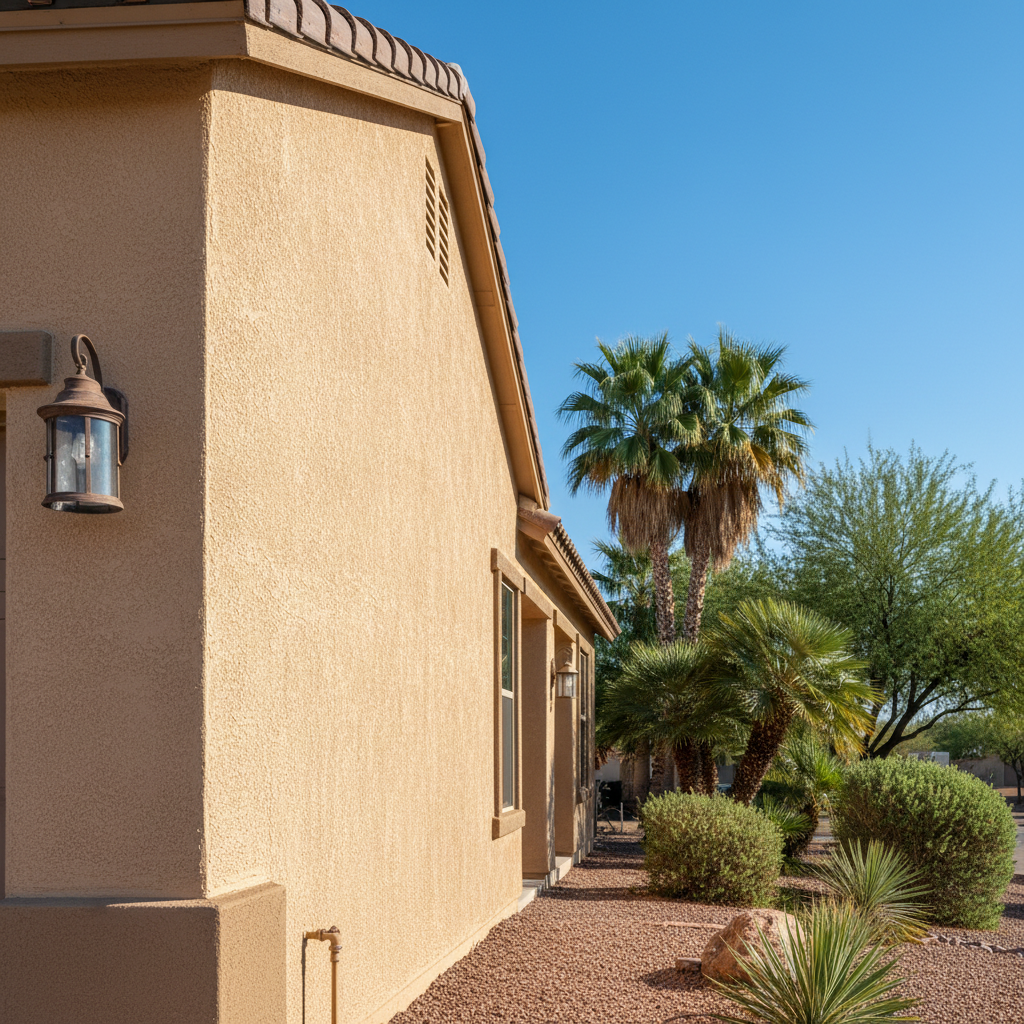
Okay, let's talk stucco. Here in Gilbert, you see it everywhere, right? From the newer homes in Power Ranch all the way to those older spots near the Heritage District. And honestly, there's a good reason for that – it's tough stuff, looks great, and it handles our crazy Arizona weather much better than a lot of other building materials. But "tough" doesn't mean "bulletproof," does it? That intense desert sun, those sudden monsoon downpours, and even our unique soil conditions can really put your home's exterior through the wringer. So, if you want your stucco to truly last, you've got to give it a little love.
Making Your Stucco Last Longer in the Desert
Stucco can hang around for a really long time in Arizona – we're talking 50 to 75 years. That's especially true if it was put on correctly and you keep up with it. The main thing is understanding what it's up against out here. Our super strong UV rays just chew up paint and coatings. Plus, the constant expanding and shrinking from those huge temperature swings we experience (110°F in summer, sometimes dipping to 50°F in winter) really stresses it out. From what I've seen, here's what truly makes a difference:
- Clean it Regularly: Dust, dirt, and just general desert crud builds up fast. You really ought to clean your stucco at least twice a year. Use a soft-bristled brush and some mild soap. If you're using a pressure washer, keep it on a low setting (under 1500 PSI) so you don't mess up the surface. And please, no harsh chemicals; those can really ruin the finish.
- Seal it Up: Putting on a good quality sealant every few years is a smart move. It helps protect against those brutal UV rays and keeps moisture from getting in. Just make sure it's a breathable sealant, especially in our climate, so any trapped moisture still has a way to get out.
- Keep Water Away: This one's a big deal. Even though we live in a dry place, monsoon storms can drive rain sideways, and sprinkler overspray is a super common cause of stucco damage. Make sure your gutters and downspouts are clear and sending water far away from your foundation. Also, double-check your sprinklers – you absolutely don't want them constantly soaking your stucco walls. Water sitting at the bottom of your walls? That's a silent killer.
- Paint for Protection: If your stucco is painted, go for a high-quality, UV-resistant exterior paint. Lighter colors can even help bounce off some of that heat and keep your walls cooler, which cuts down on thermal stress.
What "Regular Maintenance" Actually Looks Like
Think of it kind of like checking the oil in your car – a little bit of proactive care now saves you a lot of headaches later. I always suggest a routine maintenance plan that includes:
- Monthly Visual Checks: Just take a quick walk around your house once a month. Look for anything new or different that catches your eye.
- Annual Deep Dive: At least once a year, and ideally before monsoon season really gets going around June, do a really thorough inspection. Look closely at your exterior walls for any chips, cracks, weird discoloration, or soft spots. Pay extra attention to areas that get a ton of sun.
- Check the Caulking: Look around your windows and doors, and wherever the stucco meets other materials. Caulking can break down over time, and when it does, it's basically an open invitation for moisture.
- Watch Repaired Areas: If you've had any stucco repairs done, keep an eye on them, especially after a good rain. Look for new stains or cracks near the patch.
Signs Your Stucco Might Be Having Problems
Your stucco usually tells you when something's not right; you just need to know what to look for. Catching these things early can save you a ton of frustration and cash down the road.
- Cracks: Hairline cracks are pretty normal because of our temperature swings and houses settling. But if you see cracks bigger than 1/8 inch, ones that are growing, or cracks clustered around windows, doors, or corners, that's a definite red flag. Diagonal cracks spreading out from window corners can even hint at foundation issues. And that "alligator skin" or "dried riverbed" look? That usually means the stucco dried too fast when it was first put on.
- Stains and Discoloration: Dark streaks, brown stains, or that white chalky stuff (we call it efflorescence) often mean water is getting in where it shouldn't. Keep an eye out for these below windowsills, near the bottom of walls, or around any fixtures.
- Soft Spots, Bulging, or Bubbling: If you tap gently on your stucco and it sounds hollow, or if you notice areas that feel soft, are bulging out, or bubbling, that's a strong sign of moisture damage underneath. This could mean the stucco is actually coming loose from the wall.
- Peeling or Flaking: This can point to poor adhesion, water getting in, or problems with the surface underneath.
- Gaps: Any gaps or separations between the stucco and other parts of the building, like trim or flashing, are trouble spots.
When to Call a Pro
While you can probably fix some minor issues yourself, there are definitely times you absolutely need to bring in the experts. Seriously, don't wait until a small problem blows up into a massive, expensive repair.
- Big or Growing Cracks: If you've got cracks wider than 1/8 inch, or any cracks that are getting bigger, it's time to call someone like us at Peak Stucco Solutions. These can signal structural movement or a lot of water getting in. Just filling them won't fix the real problem.
- Water Stains or Soft Spots: If you keep seeing water stains, or find any soft, bulging, or bubbling areas, you've likely got moisture trapped behind your stucco. This really needs a professional to check it out to prevent mold, rot, and structural damage.
- Exposed Lath or Wire Mesh: If you can actually see the mesh or lath underneath, your stucco is seriously compromised and needs immediate attention.
- Widespread Damage: If you're noticing a lot of cracks, discoloration over big areas, or multiple soft spots, it's just smarter to get a professional inspection.
- Before Painting or Sealing: If you're planning to paint or reseal your stucco, it's a good idea to have a professional check for any hidden issues first. We can make sure any repairs are done right before you put on a new finish.
- You're Just Not Sure: Honestly, if you're ever in doubt about what you're seeing, just pick up the phone. It's always better to get an expert opinion, isn't it? We're right here in Gilbert, and we know exactly what our desert homes go through.
Taking care of your stucco isn't just about making your house look nice from the street; it's about protecting your biggest investment. A little bit of careful watching and quick action will keep your Gilbert home looking sharp and standing strong for decades.