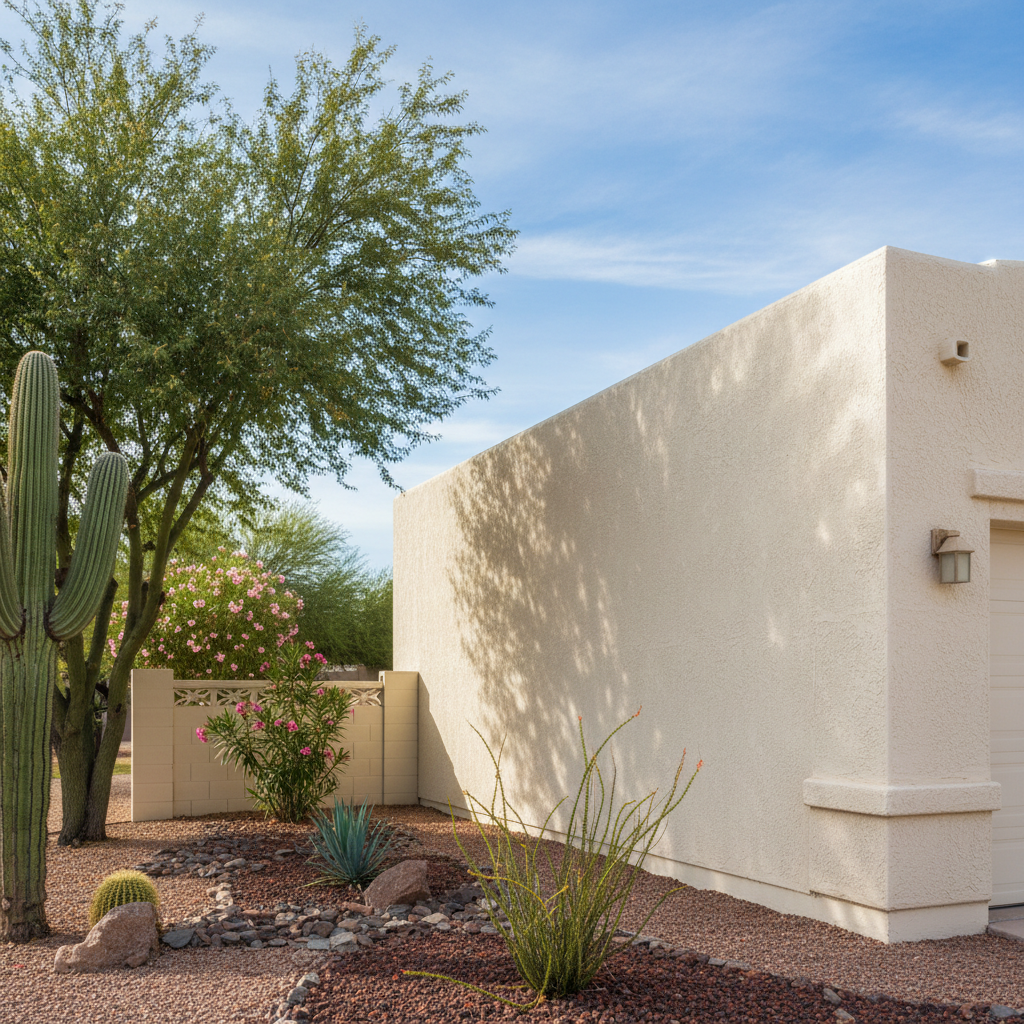
Running a business in Gilbert means you've got enough on your plate without worrying about your building's exterior. But if your commercial property has stucco, ignoring it can lead to bigger, more expensive headaches down the road. I've seen it countless times. Good stucco on a commercial building isn't just about curb appeal; it's about protecting your investment and keeping your business looking professional. So, let's talk about how to keep that stucco in top shape, especially with our Arizona sun beating down on it.
Make Your Commercial Stucco Last Longer in the Desert
Our desert climate is tough on everything, and stucco is no exception. The intense UV rays, extreme temperature swings, and occasional monsoon downpours really put it to the test. To extend the life of your commercial stucco, you've got to be proactive.
- Clean It Regularly: Dust, dirt, and pollution build up. A gentle power wash (low pressure, please!) once a year can make a huge difference. You're not trying to strip paint, just wash away grime. For tougher spots, a mild detergent and a soft brush can work wonders.
- Good Drainage is Key: This is huge. Make sure your gutters are clean and directing water away from the building. Check your landscaping – sprinklers shouldn't be constantly soaking the stucco. Water is stucco's enemy, especially when it sits.
- Use Sealants and Coatings: A good quality elastomeric paint or sealant can add an extra layer of protection against our harsh sun. It also keeps minor cracks from becoming major issues. Think of it as sunscreen for your building.
What Regular Upkeep Looks Like
For a commercial property, regular upkeep isn't just about fixing things when they break; it's about stopping them from breaking in the first place. You've got to do a visual check pretty often. I'd say at least twice a year, maybe more if you've got a busy property with lots of foot traffic or nearby construction, you know?
Walk around your building. Look at the stucco up close. Are there any obvious cracks? Peeling paint? Discoloration? Pay extra attention to areas around windows, doors, and rooflines – these are common spots where water can get in. If you see any plants or vines growing on the stucco, get them off. They hold moisture and can damage the finish.
It's also a good idea to check your expansion joints. These are those thin lines you see in larger stucco walls. They're designed to let the stucco expand and contract with temperature changes. If the sealant in these joints is cracked or missing, it needs to be replaced. This is a small fix that prevents big problems.
Warning Signs You Can't Ignore
You don't need to be a stucco expert to spot trouble. Here are some clear warning signs that your commercial stucco needs attention:
- Cracks: Hairline cracks are common, but anything wider than a credit card, or cracks that run horizontally or in a spiderweb pattern, are a red flag. These can mean structural movement or water is getting in.
- Discoloration or Stains: Dark streaks, especially under windows or near the roof, usually mean water is getting in and running down the wall. Green or black spots could be mold or mildew, which definitely means moisture.
- Bulging or Soft Spots: If you push on the stucco and it feels soft, spongy, or bulges out, you've likely got water trapped behind it, causing damage to the substrate. This is serious.
- Peeling or Flaking Paint: This often means the stucco isn't breathing properly, or there's moisture trying to escape from behind the wall.
- Efflorescence: That white, powdery substance you sometimes see? That's salt deposits left behind as water evaporates from inside the stucco. It's a clear sign of water intrusion.
Especially in areas like Gilbert's older downtown buildings, where stucco might be decades old, these signs can pop up quickly if nobody's keeping an eye on them.
When to Call a Professional
Look, I'm all for saving money and doing what you can yourself. But some things are best left to the pros. When you see those warning signs I just mentioned, that's when you pick up the phone. Don't wait until a small crack turns into a full-blown wall replacement.
You definitely need a professional if you're dealing with:
- Big Cracks: Especially if they're widespread or look structural.
- Water Getting In: Any sign of water getting behind the stucco needs immediate attention to prevent rot and mold.
- Bulging or Soft Areas: This means the underlying material is compromised.
- Stucco Failure Around Openings: Windows, doors, and vents are critical areas. If the stucco is failing here, water will get in.
A good stucco contractor, like us at Peak Stucco Solutions, can properly figure out the issue, explain what's going on, and give you a solid plan to fix it right the first time. We've got the tools and the know-how to handle everything from minor repairs to full redashing, making sure your commercial property stays protected and looks its best for years to come. Don't let a small problem become a huge expense.